స్వేచ్ఛా కవిత్వము
Swecchaa Kavitvamu — 160+ Telugu Free Verse Poetry Collections
Free Verse Poetry — the complete collection of Prof. Madiraju Ranga Rao's poetic works spanning decades of literary expression.
The Nine Volumes of Swecchaa Kavitvamu
A guide to the nine bound volumes (1953–2025), from the founding Volume I to the valedictory Volume IX — seven decades of Telugu free verse.
Volume I Addendum Collections
మొదటి సంపుటం అదనపు సంకలనాలు
Foundational free verse works of Prof. Madiraju Ranga Rao from 1953–1975 and 1953–2000, preserved with their original front title pages.
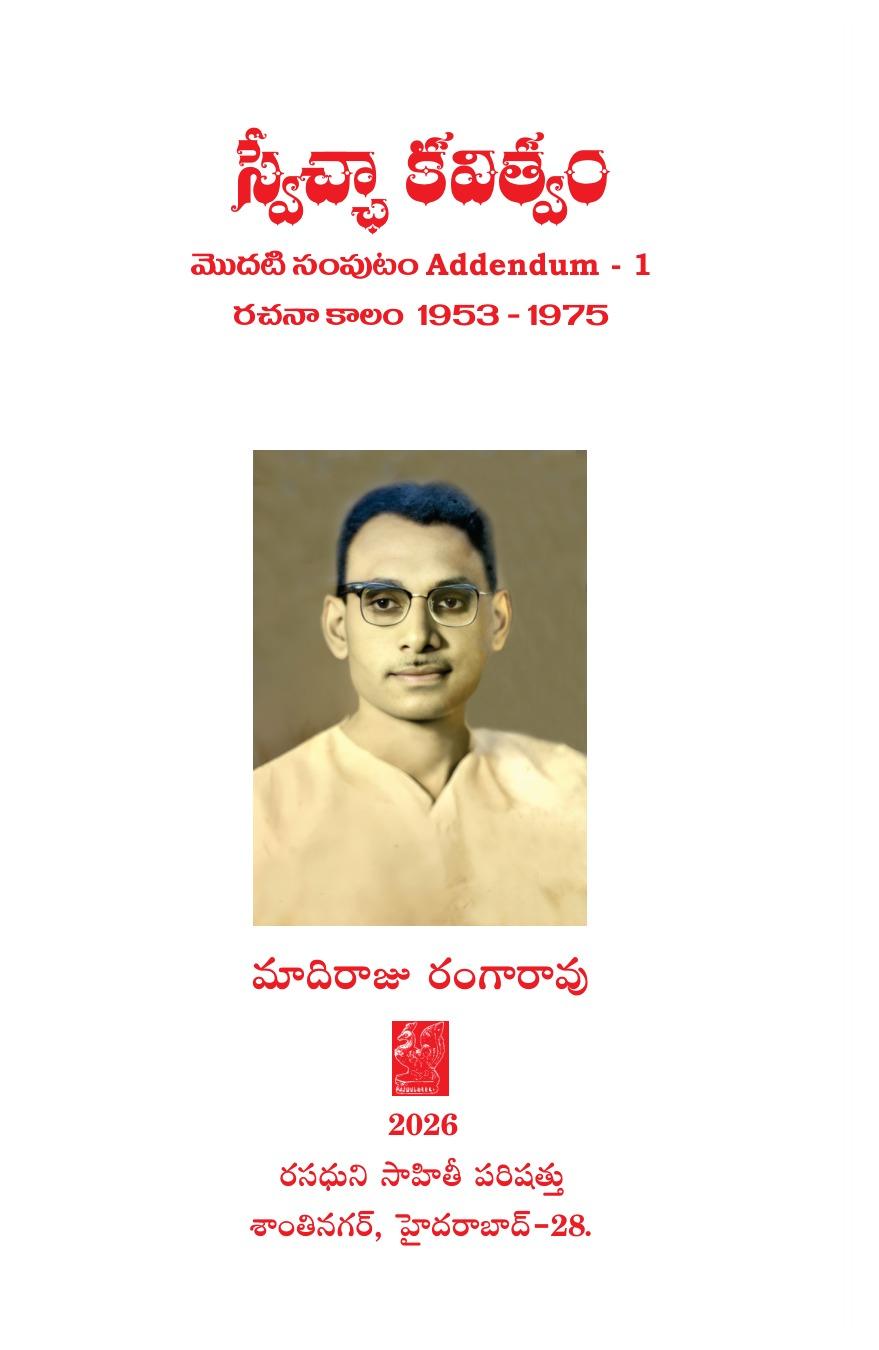
Volume I — Addendum 1
మొదటి సంపుటం — Addendum - 1
“The early seeds of poetic freedom (1953–1975)”
Volume I Addendum 1 gathers rare early free verse collections written by Prof. Madiraju Ranga Rao between 1953 and 1975. Published in 2026 as a loving tribute, this volume presents the foundational phase of his seven-decade poetic journey, showcasing the uninhibited democratic voice and social consciousness of early Swecchaa Kavitvamu.
- early free verse
- foundational poetry
- social awakening
- literary tribute
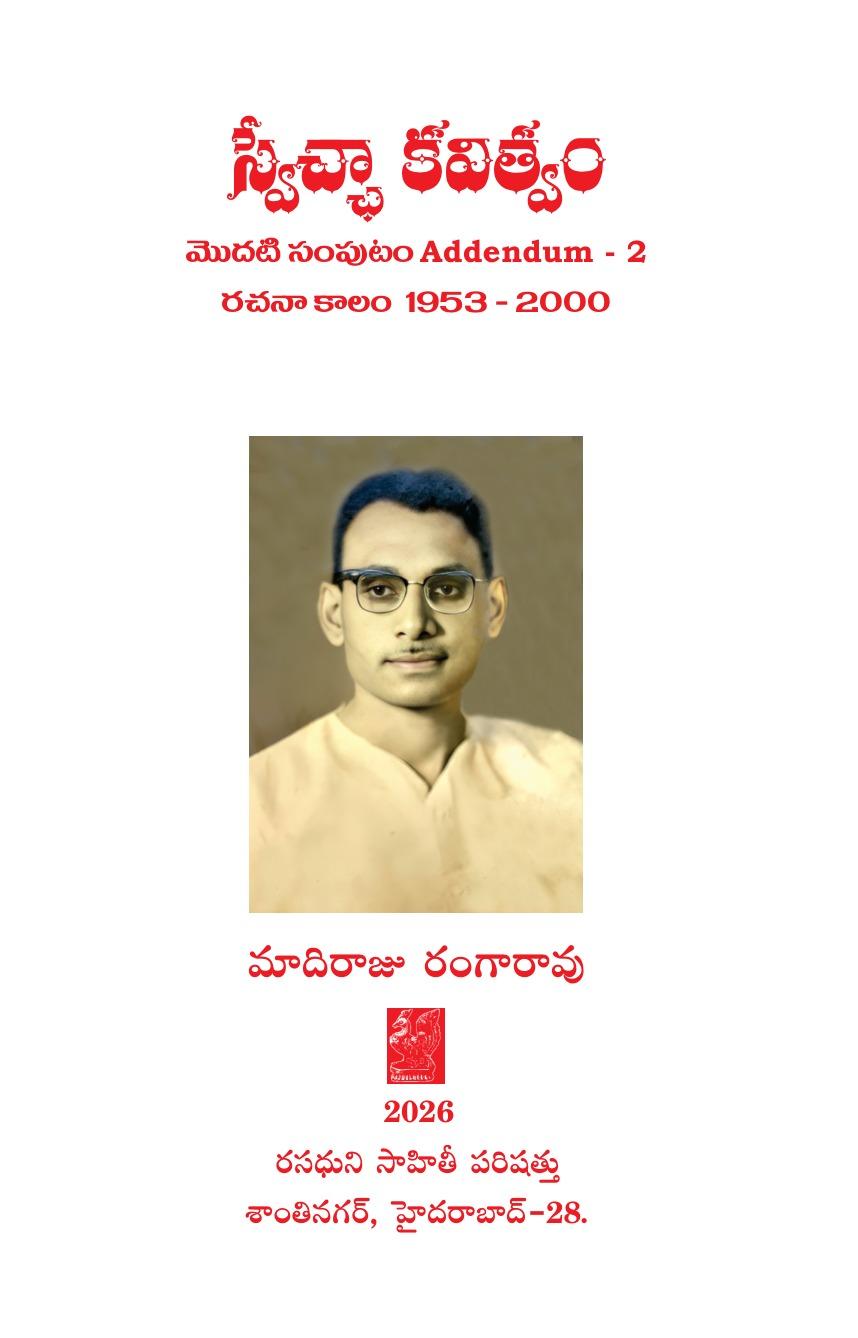
Volume I — Addendum 2
మొదటి సంపుటం — Addendum - 2
“A five-decade journey of free verse (1953–2000)”
Volume I Addendum 2 spans nearly five decades (1953–2000) of Prof. Madiraju Ranga Rao's poetic expression. Compiling extensive free verse works from the second half of the 20th century, this collection provides invaluable depth into the evolution of his philosophical inquiry, humanism, and mastery of form.
- 50-year poetic arc
- philosophical evolution
- rare free verse
- archival collection
స్వేచ్ఛా కవిత్వము
The Collected Volumes
Nine bound volumes of Prof. Madiraju Ranga Rao's free verse poetry — seven decades of literary expression, gathered as a single digital archive.
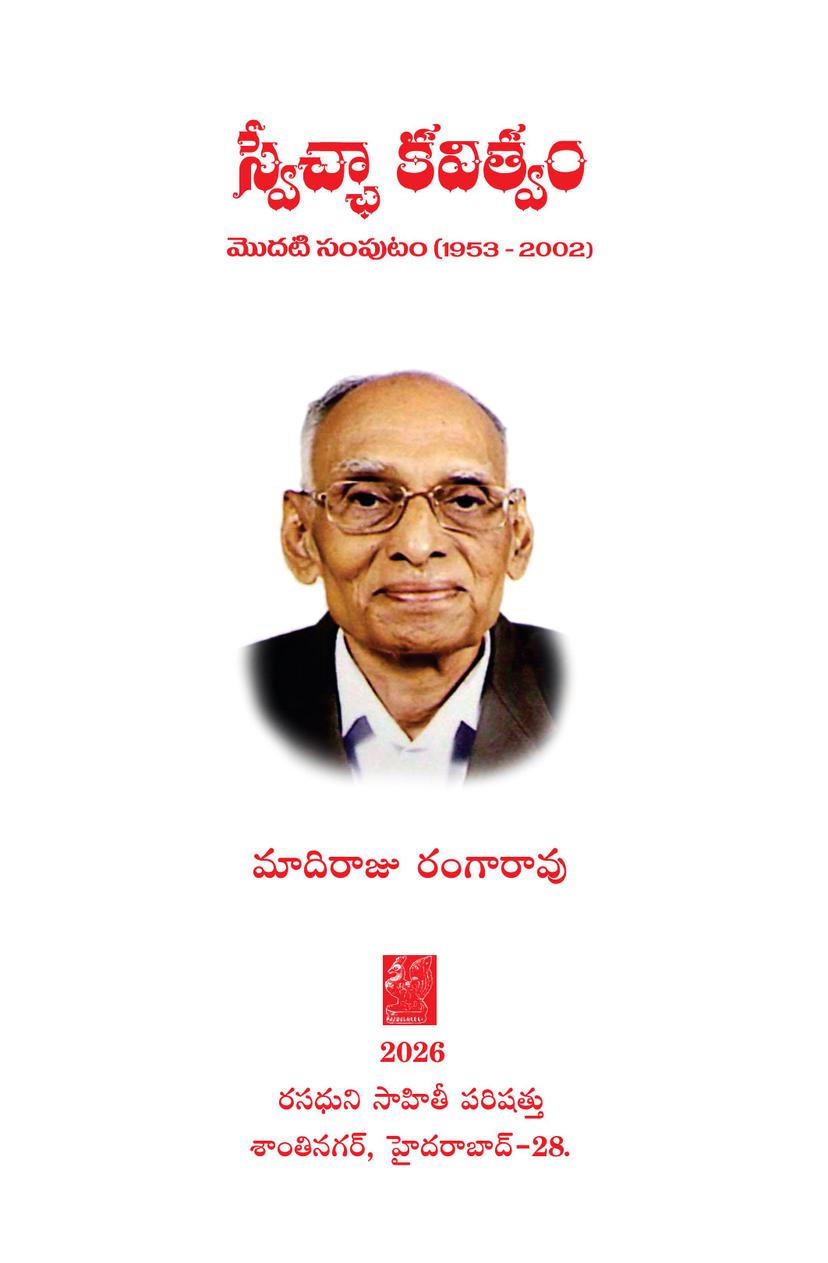
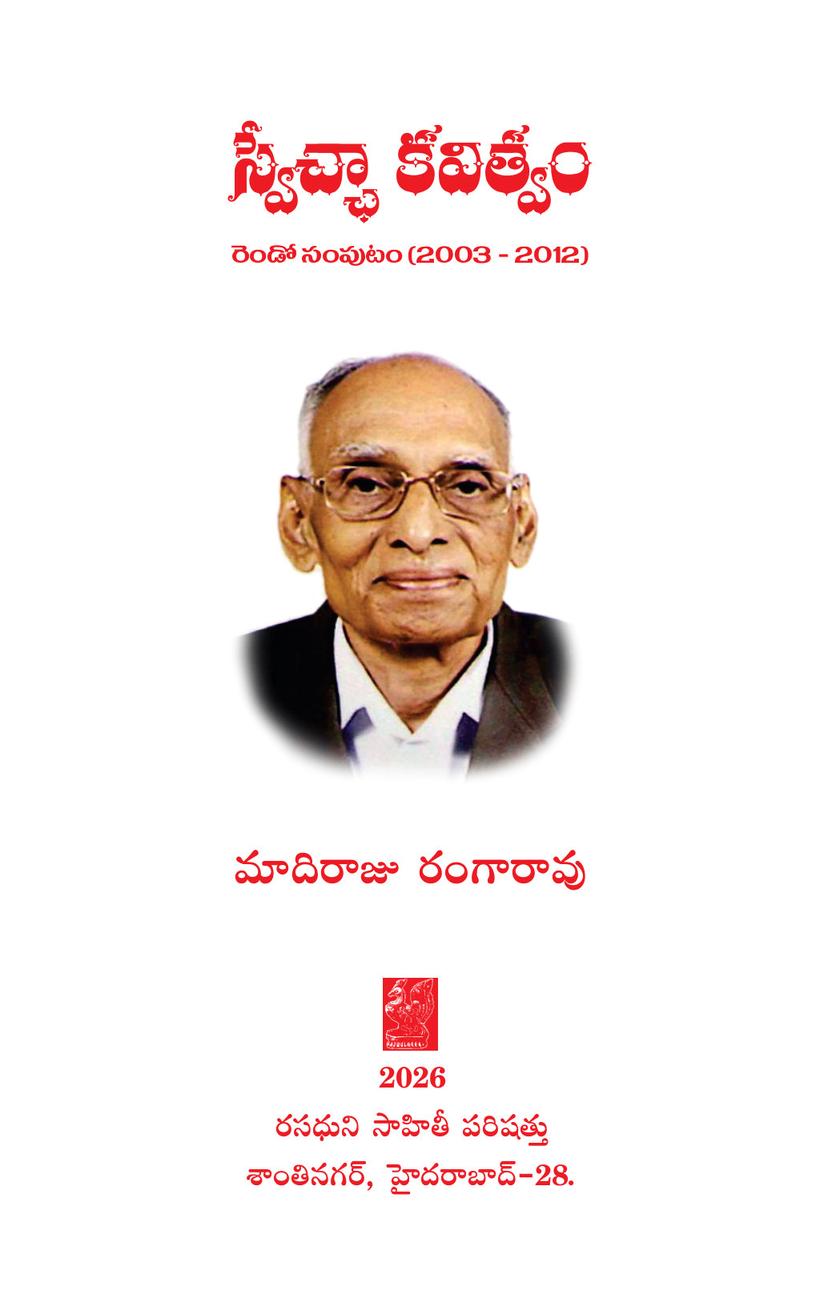
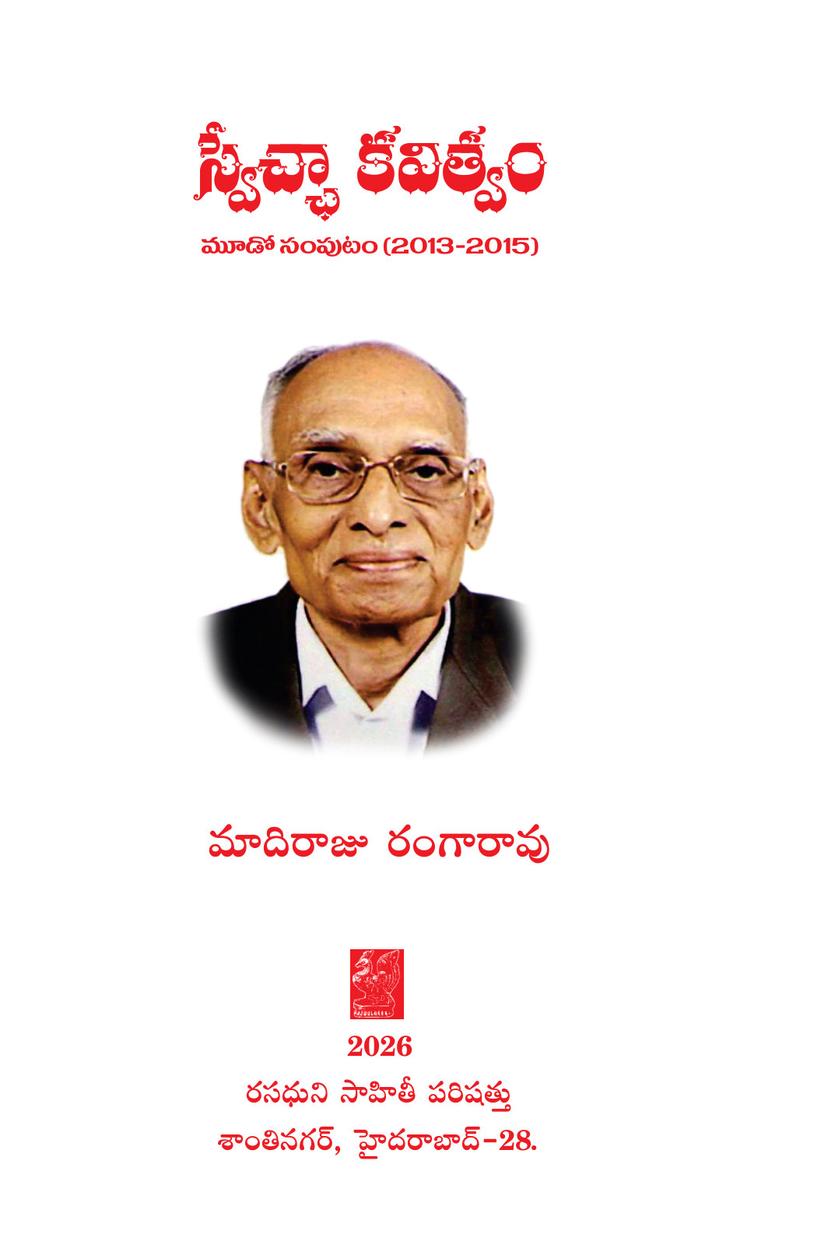
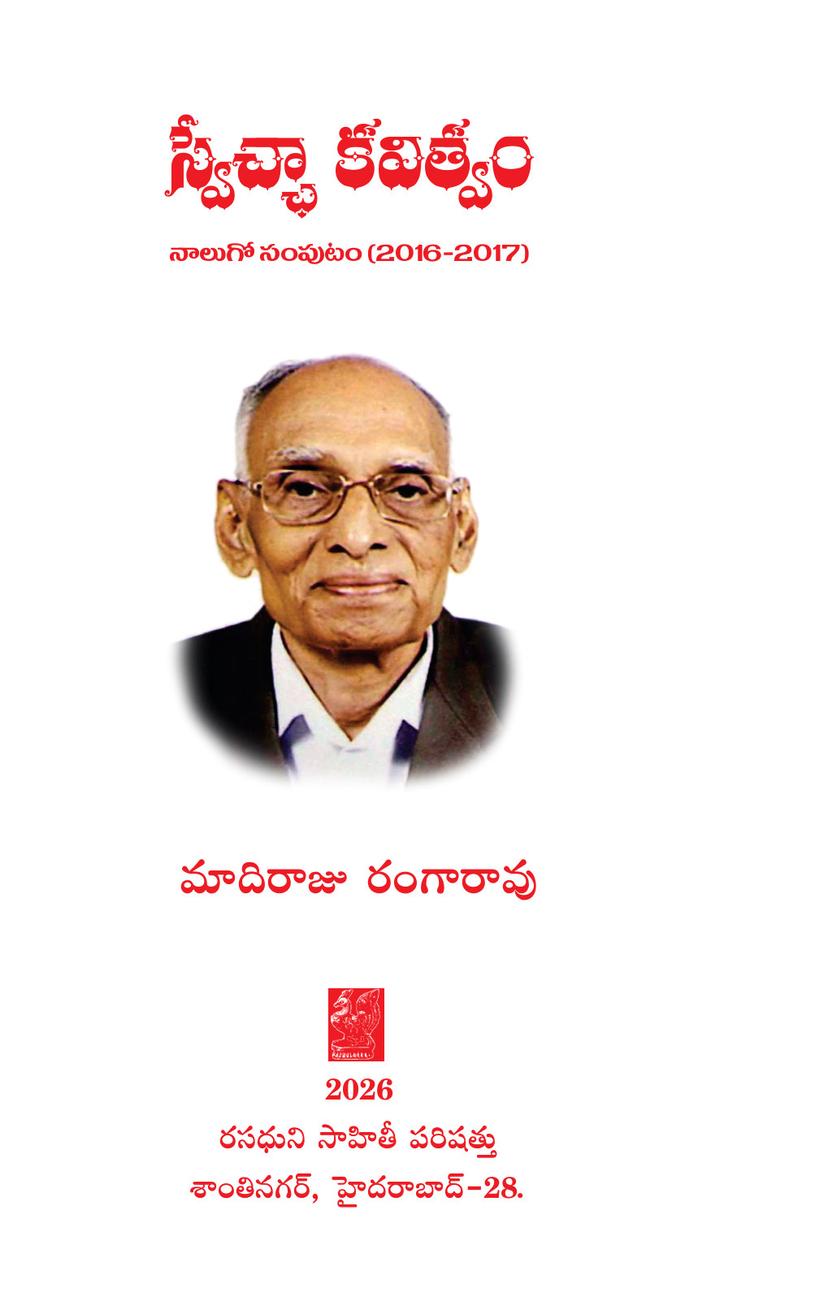
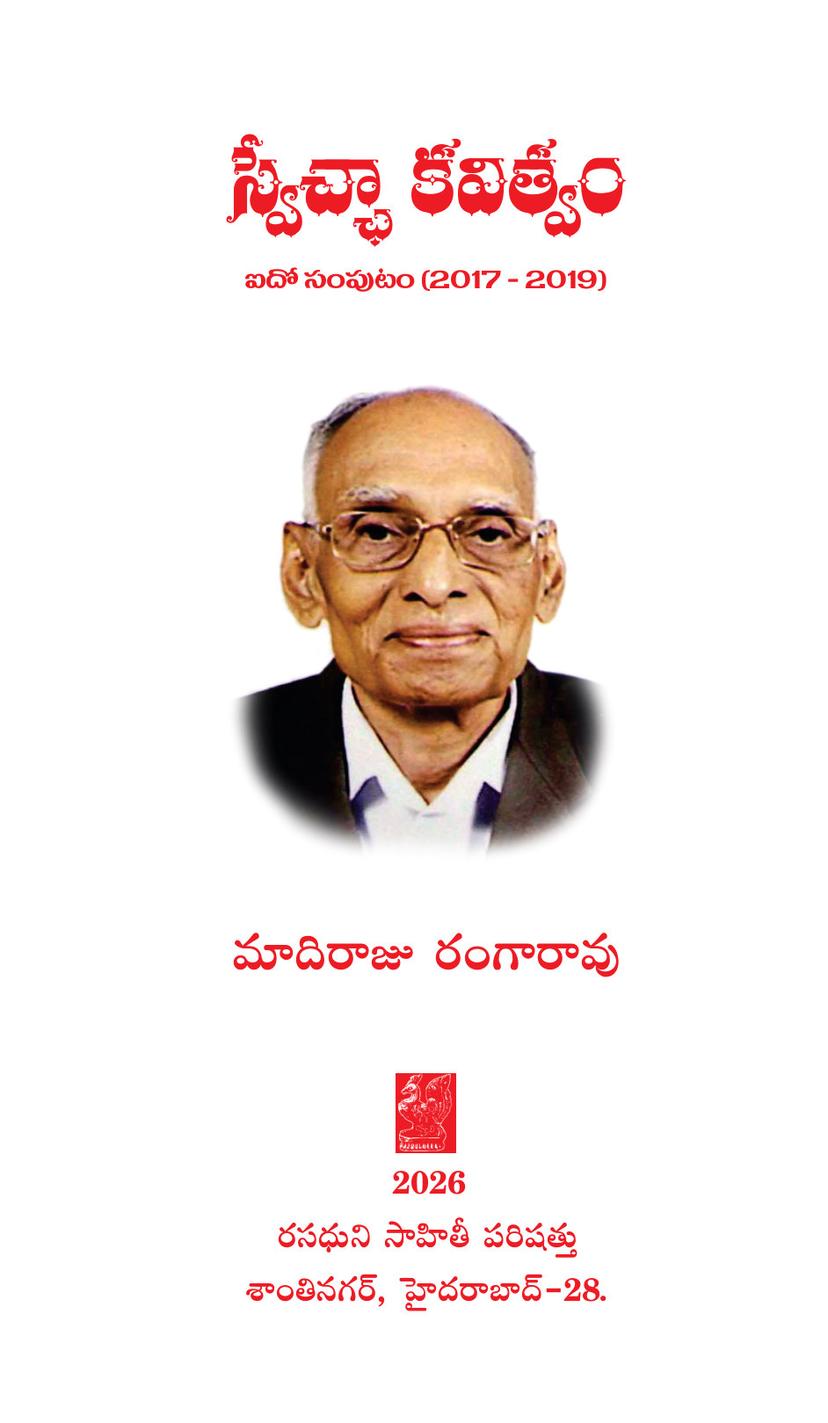
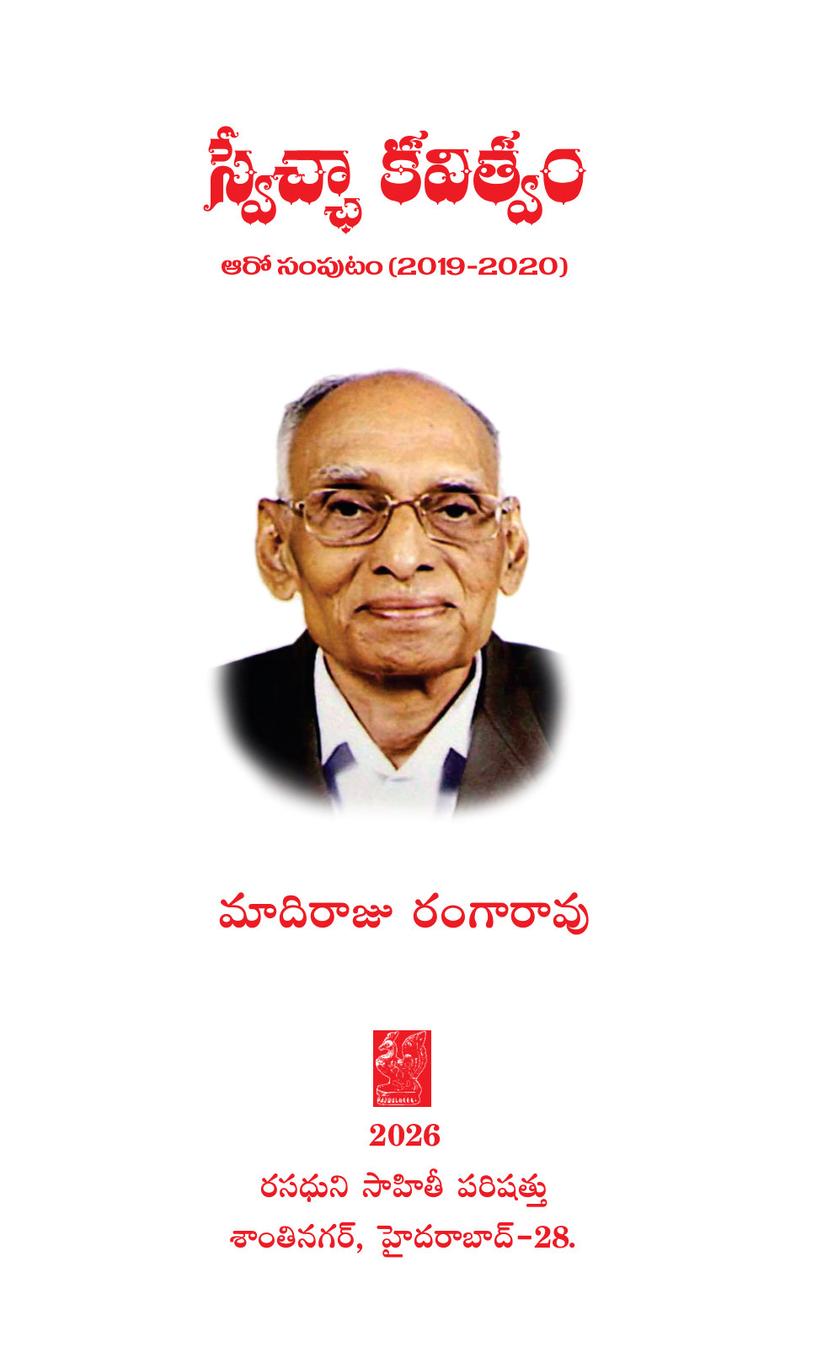
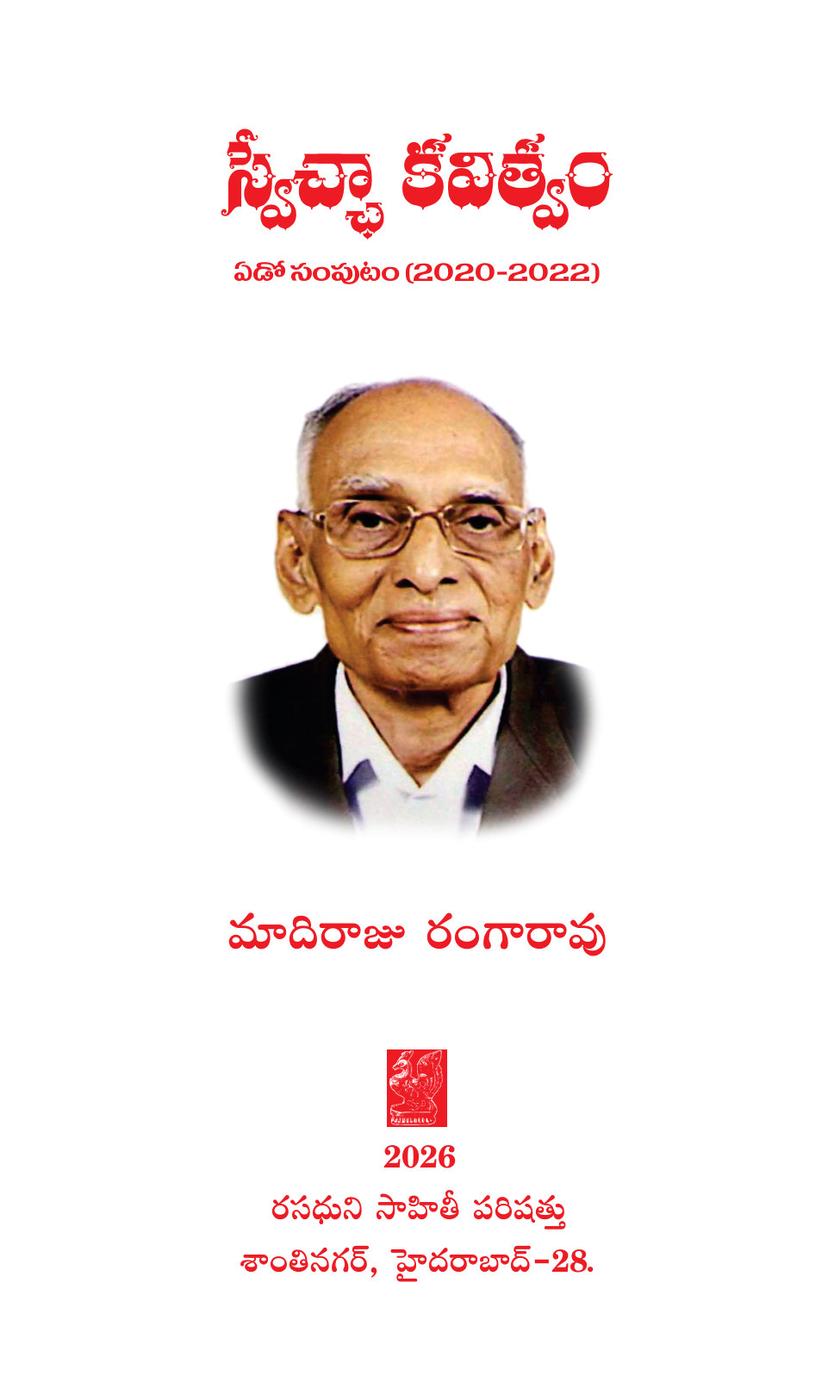
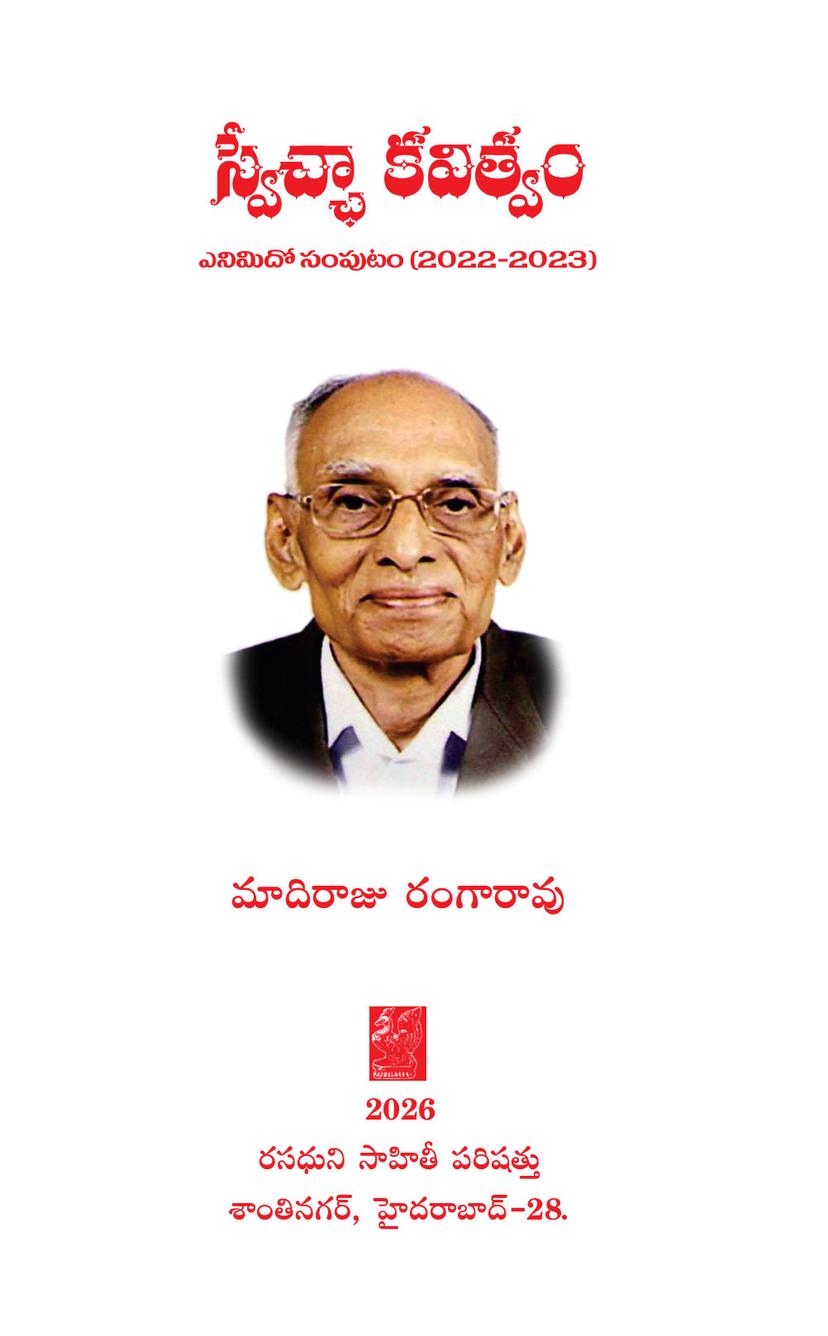
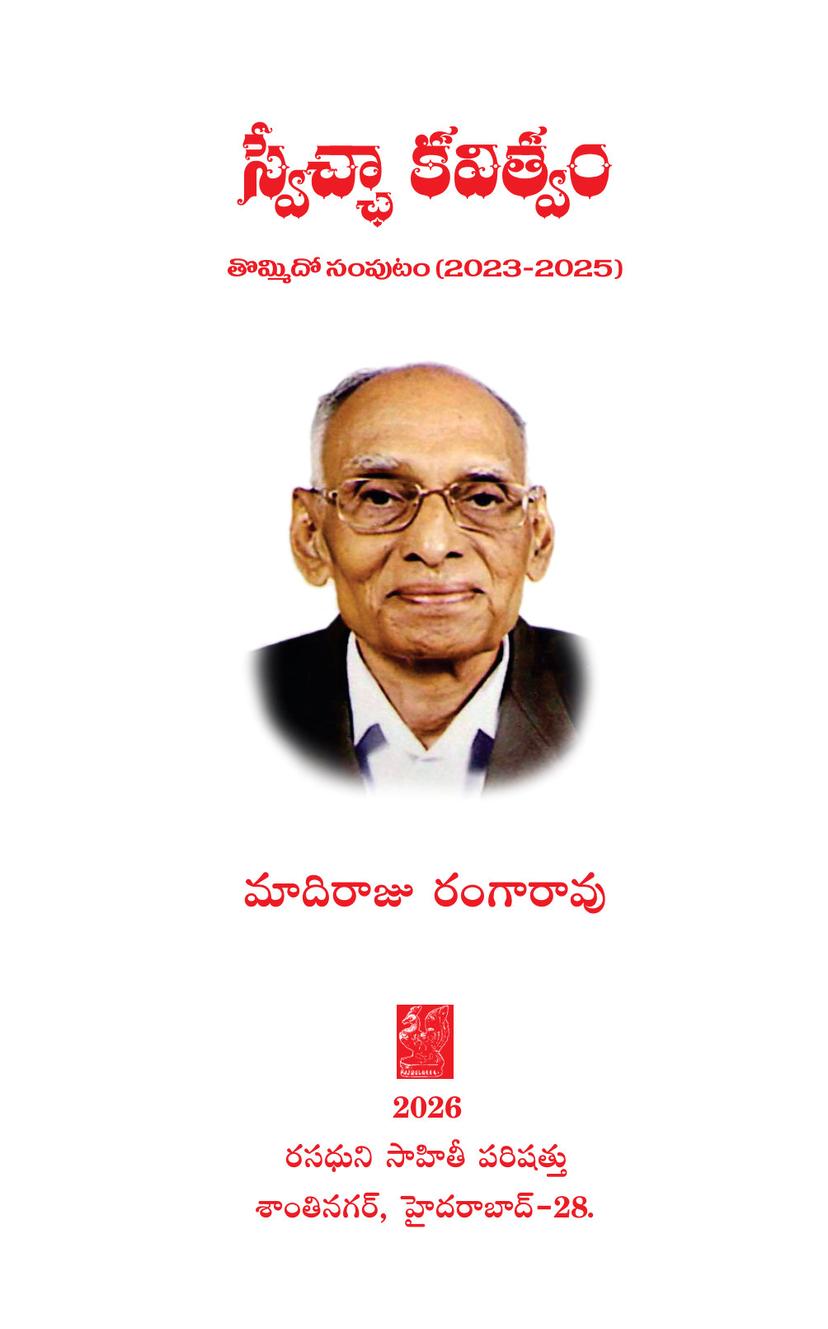
నిరాశలో మేల్కొంటాను / ఆశతో జయిస్తాను / నే నీ యుగసంకేతాన్ని — మాదిరాజు రంగారావు, యుగసంకేతం (1970) // విచారించడం మానవ స్వభావం / ఆలోచించడం మనోజీవి లక్షణం / దేవతల్లా జన్మించి / రాక్షసుల వలె జీవించి / ప్రయాణం విడిచే రోజు / అంతిమ క్షణం మాత్రం మానవులు / ఆకాశంపై వెలసిన ఇంద్రధనుస్సు / కనిపిస్తుంది చాలమంది కంటికి / మనస్సులో విరిసిన ఇంద్రధనుస్సు / చూడగలడా ? అనుకున్న ప్రతిమనిషి — మాదిరాజు రంగారావు, మేల్కొన్న ఆకాశం (1959) // శిశువు వలె ప్రత్యక్షమై / వృద్ధు వలె నిష్క్రమించే సూర్యుడు / ప్రతి ఉదయం అవతరించు / నిత్య నవ్య పురాణమూర్తి / జీవితమొక చివర తెలియని / చీకటి వంతెన / సంఖ్య తెలియని అనుభవాల / వెలుగు మెట్లపై / అడుగడుగునా పునర్జన్మ ఎత్తినట్లు / అడుగడుగులో స్వర్గ శకల మందినట్లు / గమనం సాగించే / చీకటి ముద్దలు కొందరు / దీప శిఖలు మరికొందరు — మాదిరాజు రంగారావు, మానవీయం (1970) // నేనీ క్షణం అనేక వాసంత సూర్యుల కళ్యాణ కాంతికి సంకేతం / నేనీ క్షణం రస ప్రవాహాల ఆనంద నృత్యానికి అవనీ చక్రం — మాదిరాజు రంగారావు, ఆనంద ధుని (1975) // గగన తలంపై వెలిగే సూర్య చంద్రులు / ఏ విశ్వనాథుని కీర్తి చిహ్న కేతనాలు? / నా కనుల నుండి మీ కనులదాక / మింటి కెగసి నిల్చిన తాజ్మహల్ / అజంతా శిల్పకళా ఖండాల్లా / లక్షలాది రసరాణ్మణుల / సమాకర్షించలేని; శిశువునకు / పశువునకు, స్పందించే గుండెలేని / తనూశిలకు కనుపించని / స్వచ్ఛ శ్వేతవర్ణ మూర్తివంతములు / కాలశ్మశానంలోని కీర్తిస్తంభాలు — మాదిరాజు రంగారావు, కీర్మీరం (1957) // మేఘాన్ని అమ్మే దెవరు ? / హృదయాన్ని కొనే దెవరు — మాదిరాజు రంగారావు, హృది నుండి హృదికి (2023) // బహు శాఖలతో సృజన తరువు / పలు పాయాలతో జీవన ఝరి / జన హిత కర తేజో రుచిరం / స్వేచ్ఛా కవిత్వం సర్వ స్వతంత్రం — మాదిరాజు రంగారావు, మౌనం మాట్లాడుతుంది (2024)
Addendum Collections
Maanaveeyam
March 2026
“The human in every face we pass”
Maanaveeyam — 'humanness' — gathers poems centred on Ranga Rao's core philosophical commitment: the full worth and dignity of each human life as the proper subject of poetry. Published in March 2026, these poems are neither religious nor narrowly ideological — they locate the sacred in the ordinary. A farmer's calloused hands, a widow's morning routine, a child's first question: each becomes the occasion for verse that is both intimate and universal. This collection functions as an independent introduction to the poet's humanist worldview and is an ideal first volume for readers entirely new to Swecchaa Kavitvamu.
- humanism
- human dignity
- compassion
- everyday sacred
Melkonna EE Samayam
2026
“The moment of waking that changes everything after it”
The title translates as 'This Time of Awakening' — a collection attuned to moments of sudden clarity, both personal and political. Ranga Rao writes with urgency about consciousness: the abrupt recognition of injustice, the instant when a familiar landscape becomes strange, the personal awakening that demands response. The free verse is tightly controlled and often aphoristic — individual poems are brief but carry the density of longer meditations. Published in 2026, this collection is among the most quotable in the addendum series and particularly well-suited to sharing digitally, where brief, striking verses travel furthest.
- awakening
- consciousness
- the present moment
- urgency
Muktakaalu & Usha Agamanam
March 2026
“Muktakam: the poem complete in a single breath”
This volume brings together two complementary forms published in March 2026. Muktakaalu are standalone Telugu lyric fragments — each verse complete in itself, in the tradition of the single perfect image. Usha Agamanam ('The Arrival of Dawn') is a sequential suite tracing first light from darkness to full morning as a sustained metaphor for hope and regeneration. Together they showcase Ranga Rao's mastery at the small scale — his ability to compress enormous feeling into eight or ten lines — as a counterpoint to the expansive canvas of the nine primary volumes. Essential for readers interested in the Telugu lyric miniature.
- lyric brevity
- dawn
- renewal
- the standalone verse
- hope
Mukthadhatri
March 2026
“The liberated earth speaks in its own voice”
Published in March 2026, Mukthadhatri — 'liberated earth' or 'free mother earth' — presents the natural world not as background but as protagonist. Ranga Rao gives voice to the land itself: its rivers, soil, forests, and seasons are agents with their own perspectives and grievances. There is an ecological awareness that feels strikingly contemporary — the earth as a subject of rights and dignity, not merely a setting for human drama. This collection connects the Swecchaa Kavitvamu tradition to broader conversations about nature writing and the environmental imagination in Indian literature.
- earth
- liberation
- ecology
- the land as protagonist
- nature's agency
About Swecchaa Kavitvamu
Swecchaa Kavitvamu(స్వేచ్ఛా కవిత్వము), meaning “Free Verse Poetry,” represents Prof. Madiraju Ranga Rao's lifelong conviction that poetry in a democratic society should be unbound by traditional metrical constraints. The poetry collection explores life, emotions, relationships, social thought, and human values through modern Telugu free verse poetry and literary expression.
Prof. Ranga Rao published one free verse poetry collection monthly for decades, producing approximately 160 poetry collections. His poetic style emphasizes conceptual depth over narrative incidents, with each line functioning as philosophical definition — a style often compared to the metaphysical poetry tradition. Read his Telugu literary criticism works for deeper scholarly analysis.
His work was the subject of two UGC-sponsored research initiatives, examining the intersection of democratic values and literary expression in the Telugu poetic tradition. Explore his awards and academic recognition.
Frequently Asked Questions
What is free verse poetry in Telugu?
Free verse (Swecchaa Kavitvamu) in Telugu is a modernist poetic form that discards traditional metrical constraints (Chhandas) in favour of natural rhythmic expression and democratic themes. Pioneered by Prof. Madiraju Ranga Rao, it reflects the natural voice of a free people.
Who is Madiraju Ranga Rao?
Professor Madiraju Ranga Rao (1935–2025) was a Telugu free verse poet, literary critic, and former faculty member of Kakatiya University. He authored over 160 poetry collections under the title Swecchaa Kavitvamu and 20+ literary criticism works on Telugu and Sanskrit literature.
What is Swecchaa Kavitvamu?
Swecchaa Kavitvamu (స్వేచ్ఛా కవిత్వము) is the collected poetic works of Madiraju Ranga Rao, comprising nine primary volumes and four addendum collections totalling over 160 individual poetry collections exploring life, philosophy, society, and human values.
How many poetry collections did Madiraju Ranga Rao write?
Madiraju Ranga Rao wrote over 160 poetry collections across six decades, published in nine volumes of Swecchaa Kavitvamu and four addendum collections including Maanaveeyam and Mukthadhatri.
Where can I read the poetry of Madiraju Ranga Rao?
All nine volumes of Swecchaa Kavitvamu and the addendum collections are freely available to read and download on this page at madirajurangarao.com/poetry.
What does Swecchaa Kavitvamu mean?
Swecchaa Kavitvamu is a Telugu literary term meaning 'free verse poetry' — poetry composed without the constraints of classical metre, rhyme schemes, or chandas (the traditional prosodic system of Telugu verse). The word 'Swecchaa' translates as 'freedom' or 'free will', and 'Kavitvamu' means 'poetry'. Together, the term describes a form that prioritises authentic emotional expression, natural language rhythm, and thematic depth over formal metrical convention.
What themes are explored in Madiraju Ranga Rao's Swecchaa Kavitvamu?
The Swecchaa Kavitvamu of Madiraju Ranga Rao explores a rich spectrum of themes — philosophical inquiry, human emotion, nature, social consciousness, spirituality, and personal introspection. Moving freely between the contemplative and the political, his verse consistently prioritises emotional authenticity over ornamental convention. These themes — timeless yet culturally specific to the Telugu literary tradition — account for the sustained resonance of his work across successive generations of readers.
In what language is Swecchaa Kavitvamu written, and is it accessible to non-Telugu readers?
Swecchaa Kavitvamu is written in Telugu, one of India's classical languages with a literary tradition spanning over a thousand years. The collections at madirajurangarao.com are presented in authentic Telugu script, with select volumes accompanied by English transliteration to support the global Telugu diaspora and international scholars. The archive is structured to serve both native Telugu speakers and those approaching the language and its literary heritage for the first time.
Deepen your understanding of Swecchaa Kavitvamu
Read Blog Articles on Telugu Poetry